
Si votre barbecue à gaz commence soudainement à projeter de hautes flammes, brûlant les aliments trop vite ou s'enflammant de nulle part, il y a un problème, mais c'est généralement facile à résoudre.
La plupart du temps, cela est dû à une accumulation de graisse ou à un petit problème de circulation d'air ou de brûleurs.
Voici comment identifier rapidement le problème et le maîtriser.
D'abord, déterminez le type de problème
Avant de démonter quoi que ce soit, jetez un coup d'œil rapide au comportement de la flamme :
- Se produit seulement juste après l'allumage ? C'est généralement normal.
- Les flammes sont inégales ou proviennent de points étranges ? Cela pourrait être les tubes venturi.
- La flamme reste haute même à faible intensité ? Probablement un problème de brûleur ou de régulateur.
- Des éclairs soudains pendant la cuisson ? Ce sont des flambées classiques.
Une fois que vous savez de quel problème il s'agit, la solution devient beaucoup plus facile.
Référence rapide : Problème vs solution
| Ce que vous voyez | Ce que cela signifie généralement | Ce qu'il faut faire |
|---|---|---|
| Grande flamme juste après l'allumage | Démarrage normal | Donnez-lui quelques secondes |
| Flammes à des endroits étranges | Tubes bloqués ou mal alignés | Nettoyer et réaligner |
| Impossible de baisser la flamme | Problème de brûleur ou de régulateur | Vérifier et remplacer si nécessaire |
| Éclairs de feu pendant la cuisson | Flambées de graisse | Déplacer les aliments, baisser le feu |
| Arrive tout le temps | Grill sale | Nettoyer en profondeur |
| Pire quand le couvercle est ouvert | Trop de circulation d'air | Fermer le couvercle ou ajuster la position |
La solution la plus courante : Nettoyer le barbecue
Cela résout plus de problèmes que les gens ne l'imaginent.
La graisse s'accumule avec le temps – sur les grilles, les plaques de cuisson et surtout dans le bac de récupération. Une fois chauffée, elle devient du combustible.
Si votre barbecue n'a pas été nettoyé depuis un certain temps, commencez par là :
- Grattez les grilles
- Nettoyez les plaques de cuisson
- Videz le bac à graisse
Vous verrez souvent une différence immédiate.
Vérifiez les tubes venturi

Si les flammes ont l'air incorrectes (pas seulement hautes, mais inégales ou provenant de points étranges), le problème est probablement lié à la circulation de l'air.
Les tubes venturi mélangent le gaz avec l'air. Lorsqu'ils sont bloqués—parfois par de la poussière ou même des insectes—la flamme devient imprévisible.
Que faire :
- Coupez le gaz
- Retirez les brûleurs
- Nettoyez les tubes
- Assurez-vous que tout est bien aligné lorsque vous remontez
Examinez les brûleurs

Les brûleurs ne durent pas éternellement. Avec le temps, ils peuvent rouiller, se fissurer ou s'user de manière inégale.
Signes à surveiller :
- Modèle de flamme irrégulier
- Points chauds
- Dommage visible
Si vous voyez l'un de ces signes, il est généralement plus facile de simplement les remplacer.
Les flambées : La vraie raison pour laquelle la plupart des flammes deviennent trop hautes
Beaucoup de gens pensent qu'il y a un "problème" avec leur barbecue lorsque les flammes s'élèvent pendant la cuisson. En réalité, il s'agit généralement de graisse qui entre en contact avec la chaleur.
Déclencheurs courants :
- Morceaux de viande gras
- Trop d'huile ou de marinade
- Un barbecue sale
Quelques petits ajustements aident beaucoup :
- Enlevez l'excès de graisse
- Laissez égoutter la marinade avant la cuisson
- Ne cuisinez pas tout à feu maximum
Utilisez la cuisson à deux zones (cela aide beaucoup)
Au lieu de faire chauffer tout le barbecue, divisez-le en deux zones :
- Un côté à feu vif
- Un côté à feu doux ou indirect
Lorsque les flammes s'embrasent, déplacez simplement les aliments. C'est simple, mais très efficace.
Outils qui facilitent la tâche
Vous n'avez pas besoin de choses sophistiquées, mais quelques bases sont utiles :
Pour le nettoyage
- Une brosse à barbecue solide
- Un grattoir pour la graisse incrustée
- Des doublures de bac de récupération
Pour l'entretien
- Une petite brosse ou un cure-pipe (pour les tubes venturi)
- Des brûleurs de rechange (si les vôtres sont usés)
Pour le contrôle de la cuisson
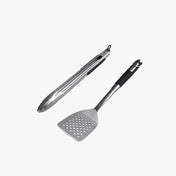
- De longues pinces (pour pouvoir réagir rapidement)
- Un thermomètre à viande
- Des tapis de cuisson si les flambées sont fréquentes
Ce qu'il ne faut pas faire
Ne versez pas d'eau sur les flambées.
Cela semble logique, mais cela ne fait que propager la graisse et peut aggraver les choses.
À la place :
- Déplacez les aliments
- Baissez le feu
- Fermez le couvercle
Si cela continue, vérifiez ceci

Si vous avez tout nettoyé et que le problème persiste, approfondissez un peu :
- Le régulateur fonctionne correctement
- Pas de fuites dans le tuyau
- Brûleurs correctement alignés
- Pas d'obstruction dans la circulation de l'air
- Le bac à graisse ne déborde pas
À ce stade, il s'agit généralement d'un problème de pièce, et non d'un problème de cuisson.
Dernières réflexions
Si la flamme de votre barbecue à gaz est trop haute, c'est presque toujours l'une des deux choses suivantes :
- Graisse et flambées
- Problèmes de circulation d'air ou de brûleur
Une fois que vous avez identifié le problème, la réparation est généralement rapide, et votre barbecue redevient normal.




Join the conversation
Share Your Thoughts
Have a question, a variation, or a result worth sharing? Add it to the conversation.