
Game day grilling in a stadium parking lot is one of those rituals that just gets better when you have the right equipment. This guide breaks down everything you need to know about choosing a tailgate gas grill in 2026, from cooking area and heat output to portability, safety, and the recipes that make your pre-game spread legendary.
Quick Answer: The Best Tailgate Gas Grill for Game Day 2026
If you want a quick answer, here it is: the Monument Grills G22 is our top pick for a tailgate gas grill heading into fall 2026. This portable gas grill features two 10,000 BTU stainless steel burners, providing a total of 20,000 BTUs, and offers a 200-square-inch cooking area that’s perfect for tailgating with friends and family.
Why it wins:
- Dual 10,000 BTU stainless steel burners deliver powerful and even heat for consistent grilling results.
- 200 square inches of cooking space easily fits 8–10 burgers or a mix of meats and vegetables.
- Compact and lightweight design at approximately 32 pounds, making it easy to transport and set up.
- Durable 304 stainless steel construction resists rust and corrosion, ensuring long-lasting use.
- Push-button ignition provides quick and reliable startup without the hassle of matches or lighters.
This grill balances portability, power, and durability, making it an excellent choice for tailgate parties and outdoor gatherings. While charcoal and pellet grills offer unique flavors and experiences, the Monument Grills G22 stands out as the best gas grill option for game day convenience and performance.
Tailgate Gas Grill vs. Other Tailgate Grills
A tailgate gas grill is built specifically for the realities of stadium parking lots: fast setup, responsive heat control, compact storage, and compliance with venue regulations. That separates it from generic portable barbecues and from charcoal or pellet alternatives that serve different purposes.
Gas grills run on propane, which lights instantly, adjusts with a knob, and produces no ash. A charcoal grill delivers a smokier taste but is slower to heat, requiring 15–30 minutes for hot coals to reach cooking temperature. Once the coals burn down, you're left with ash that needs safe disposal in a crowded lot. Many NFL and college stadiums now explicitly ban charcoal grills and only permit propane or natural gas units. A pellet grill or pellet smoker requires electricity to run its auger and fan, meaning you need an inverter, generator, or long extension cord, which is impractical in most game day setups.
Key contrasts at a glance:
- Gas grill: instant heat, precise burner control, minimal cleanup, widely permitted at venues
- Charcoal grill: superior smoky flavor, cheaper fuel, but slower startup and sometimes restricted
- Pellet grill: excellent low-and-slow capability, but electricity-dependent and bulkier to transport
- A compact portable grill powered by gas can mimic the performance of a full size grill while fitting in your car alongside chairs and a cooler
The fuel type you choose shapes your entire tailgate experience. The rest of this article helps you pick the best gas grill style for your specific parking-lot setup.
Key Features to Look for in a Tailgate Gas Grill
Think of this section as your shopping checklist. Every feature here directly impacts how well your grill performs on game day and how painlessly you can transport and clean it.
- Cooking area: Look for a minimum of 200 square inches for small groups and 300+ square inches if you regularly cook for six or more people. That cooking space determines whether you're flipping burgers in batches or serving everyone at once.
- BTU output: Around 10,000 to 20,000 BTUs are typical for tailgate cooking. Enough heat to sear a steak properly without draining a small propane cylinder in 30 minutes.
- Folding legs or foldable legs: Scissor-style frames, clip-lock legs, or fully detachable legs reduce the grill's packed footprint so it fits in a sedan trunk or truck bed.
- Lid lock and carry handles: Secure lid locks prevent accidental openings during transport, keeping grates, drip pans, and accessories from rattling loose in your car.
- Ignition system: Push button ignition is the standard for convenience. Monument Grills models has a push-button ignition for easy start without fumbling for matches.
- Built-in thermometer: Lets you monitor temperature without lifting the lid, which is critical when wind keeps stealing heat.
- Removable grease tray: Drippings are inevitable. A slide-out tray lined with aluminum foil makes post-game cleanup a five-minute task.
- Fuel compatibility: Many compact portable grill models accept both disposable 1-lb. propane cylinders (commonly used for portable grills) and larger 20-lb tanks via a separate adapter hose.

A lid helps retain heat and protects burners from wind, which matters quite a lot in an exposed parking lot on a breezy October afternoon. Adjustable dampers are more relevant to charcoal grills; gas grills rely on burner knobs and lid venting for temperature management instead. And always prioritize stability: a wide stance or locking leg frame keeps the grill safe on gravel or uneven asphalt.
Cast aluminum or stainless steel bodies resist rust in grills, so look for those materials if you plan to grill through rain, sleet, or late-season snow.
Fuel Types for Tailgating: Why Gas Usually Wins
The fuel type you choose defines how your grill behaves at a tailgate, from startup speed to cleanup effort.
- Propane gas is the primary fuel type for a tailgate gas grill. Propane heats up quickly and is easily controlled by knobs, letting you fine-tune your flame from a gentle warm to a screaming sear. Disposable 1-lb. propane cylinders are commonly used for portable grills and fit neatly in a cooler bag. Standard 20-pound propane tanks offer far more burn time but are cumbersome for tailgating unless you have room in a truck bed or tailgate trailer.
- Charcoal provides a smokier taste but is slower to heat. You get excellent flavor from real wood and hot coals, and charcoal is often cheaper, but it's bulkier to transport and produces ash that needs disposal. Charcoal grills should have ash catchers for mess-free disposal, but even with them, cleanup takes longer.
- Pellet grills use food-grade hardwood pellets for fuel and can deliver outstanding smoke flavor. However, they require electricity to power the auger and fan. Pellet grills often feature easy-to-empty fireboxes, but lugging a battery pack or generator to a stadium lot complicates what should be a simple setup. The Traeger Tailgater, for instance, has a 429-square-inch cooking surface but still needs a power source, which limits its true portability.
For game day tailgaters who value quick searing, predictable heat, and minimal cleanup before heading into the stadium, propane gas is the default winner. It's also the only fuel type allowed at many venues, making it the safest regulatory bet.
Choosing the Right Size and Cooking Area
Size affects two things simultaneously: how much food you can cook at once and whether the grill fits in your vehicle alongside the rest of your gear.
- Cooking for 2–4 people: A compact portable grill with roughly 200–300 square inches of cooking space handles the job. That's about 8–10 burgers at once, which covers a small tailgate party comfortably. A minimum of 200 sq. in. of cooking area is recommended for small groups. Look for a compact footprint that doesn't hog your entire trunk, such as a portable propane gas tabletop grill built specifically for camping and tailgating.
- Cooking for 6–10 people: Step up to 300–450 square inches and at least two burners so you can create direct and indirect heat zones. At this size you can fit two racks of brats plus vegetable skewers with room to spare.
- Foldable legs and a shallow lid profile help even larger gas grills fit in sedans, crossovers, or truck beds alongside a loaded cooler. The grill should not force you into Tetris-style packing every Saturday morning.
- Full size grills often exceed 500 square inches but are rarely practical for true tailgating unless permanently mounted on a tailgate trailer or hauled in a dedicated truck setup.
Think in terms of concrete food quantities rather than abstract square inches: if you can fit 12 burgers and a row of hot dogs simultaneously, that's a great tailgating grill for most groups.
Portability: Folding Legs, Weight, and Packability
Portability can make or break a tailgate gas grill, especially when your parking spot is 200 yards from the stadium entrance and you're hauling chairs, coolers, and a canopy.
- Folding legs and foldable legs are the single most important portability feature. Scissor-style frames collapse flat, clip-lock legs fold underneath the firebox, and detachable legs stow inside a carry bag. Folding legs and wheels enhance grill portability significantly, cutting setup time to under two minutes, especially on compact stainless tabletop propane gas grills designed for easy transport.
- Weight matters. Grills under 20 pounds are ideal for hiking or camping but may sacrifice cooking power. For tailgating, under 25 pounds is manageable solo; 25–45 pounds works if you have a rolling cart or a buddy.
- Wheels and telescoping handles versus tabletop-only designs make a real difference. A tabletop grill needs a separate stand or your truck's tailgate surface, while a grill with integrated wheels rolls across asphalt like carry-on luggage.
- Portable grills should fit comfortably in your vehicle. A compact portable grill should slot in alongside chairs, a canopy, and a cooler without forcing you to leave something behind.

Picture someone rolling their grill 50 yards from the parking space to the party spot. If that scenario sounds painful with your current setup, it's time to upgrade.
Heat Output and Performance on Game Day
BTU numbers tell you how much energy a grill produces, but they don't tell the whole story. How that energy translates into seared burgers and juicy steak depends on grate material, lid insulation, and wind protection.
- Typical BTU ranges for a tailgate gas grill: roughly 8,000–12,000 BTUs for a single-burner, 15,000–25,000 BTUs for dual or triple-burner models. Grills typically have an output of 9,000 to 20,000 BTUs, which is plenty for most tailgating scenarios.
- BTUs are only part of the story. Heat retention and burner control are more important than BTU numbers alone. A grill with thick grates, a tight-sealing lid, and effective flame tamers will outperform a higher-BTU model with thin walls and poor wind shielding. Heavy-duty grates retain heat effectively in gas grills, giving you better sear marks and more consistent temperature across the cooking surface.
- Preheat times should be 5–10 minutes to reach searing temps on a mild 60–70°F day. In a windy stadium lot, expect closer to 10–12 minutes. The Coleman Roadtrip 285 reaches 620 degrees Fahrenheit in 10 minutes, which sets a useful performance benchmark for maximum temperature capability.
- Multi-burner models allow for distinct hot and cooler zones. Independent burner control allows for multi-temperature heat zones, so you can sear meat on one side while keeping finished food warm on the other. Gas grills use burner knobs and sometimes flavorizer bars or heat tents to distribute heat evenly, while charcoal grills use adjustable dampers and coal placement for similar effect.
The bottom line: don't chase the highest BTU number on the box. Chase the grill that holds consistent temperature in real-world conditions.
Tailgate Gas Grill vs. Full Size Grills at Home
A tailgate gas grill and a backyard patio model serve different missions, even if both cook the same burgers.
- Full size grills often have 500–700+ square inches of cooking space, four to six burners, side burners for sauces, and heavy lids that weigh 30 pounds on their own. They're built to stay in one spot. Moving one to a stadium lot requires a trailer and serious motivation.
- A great tailgating grill should still deliver searing performance similar to a backyard model, just with less total cooking area and simplified features. You lose the side burner and the warming rack, but you gain the ability to toss the whole unit in a crossover and drive to the stadium.
- Many dedicated grillers maintain both: a compact tailgate gas grill for game day and a larger stationary model at home. If both are from Monument Grills, you get a familiar control layout and similar burner feel, which eliminates the learning curve when switching between Saturday tailgates and weeknight backyard cookouts.
Think of it this way: your October college football tailgate calls for a portable gas grill that heats fast and packs small. Your Tuesday evening patio session with the family calls for a full size grill with room to roast a whole chicken. Different tools, same love of outdoor use and live-fire cooking.
Pros and Cons: Tailgate Gas Grills vs. Charcoal Grills
This is the quick breakdown, not a deep technical dive.
- Gas grill pros at tailgates: near-instant heat, easy flame control via knobs, cleaner hands and clothes, often the only fuel type allowed where charcoal is restricted, and simple shutdown so you can head into the stadium without worrying about smoldering coals.
- Gas grill cons: less intense smoky flavor than charcoal or wood, dependence on propane supply (run out mid-cook and you're done), and typically higher upfront cost than budget charcoal grills.
- Charcoal grill pros: superior smoky flavor that gas can't fully replicate, simple construction with fewer parts to break, and cheaper fuel per cook. A bbq purist will always love the ritual of lighting coals.
- Charcoal grill cons: slower lighting (15–30 minutes for coals to ash over), ash disposal headaches in crowded lots, and outright bans at many venues. Charcoal is often cheaper but bulkier to transport, and dealing with hot coals after eating is the last thing you want before kickoff.
Readers who tailgate frequently, especially at venues with strict fire regulations, will usually find a gas grill to be the best grill compromise between flavor, speed, and convenience.
Safety Tips for Using a Gas Grill at Tailgates
Crowded parking lots, kids running around, and open flames demand extra caution. A few minutes of preparation prevents the kind of incident that ruins everyone's next game day.
- Surface and placement: Set your grill on a stable, nonflammable surface like concrete, gravel, or a metal table. Keep it at least three feet from vehicle bumpers, fuel cans, coolers, tents, and canopy legs. Never grill on grass or unstable ground if you can avoid it.
- Clearance and ventilation: Leave several feet of clearance around the lid and exhaust. Propane fumes and radiant heat can collect against a vehicle's paint or melt a nylon canopy faster than you'd expect. Always grill for outdoor use only, never inside a tent or enclosed space.
- Connections and ignition: Before lighting, check hose connections and fittings for leaks using the soapy water test (bubbles mean a leak). Always open the lid before ignition to prevent gas buildup. Push button ignition systems make this sequence fast and predictable.
- Fire readiness: Keep a small fire extinguisher or a bucket of sand within arm's reach. Never leave the grill unattended while burners are on, even if you're just grabbing a drink from the cooler ten feet away.

Cleanup and Transport After the Game
Most people want to break down their tailgate setup as quickly as possible once the final whistle blows or right before heading inside for kickoff. Quick cleanup can be done before heading into the stadium if you plan ahead.
- Shut down safely: Turn off all burner knobs first, then close the propane valve at the tank. Let the grill cool with the lid slightly open or vented. Once grates are warm but not scorching, scrub them with a grill brush. Removable grates simplify cleaning after grilling, so look for a model where grates lift out easily.
- Grease management: Empty removable grease traps into a trash bag. Line your drip tray with aluminum foil before each cook and you can simply ball up the foil and toss it, cutting cleanup time in half. Look for grills with removable grease traps for easy cleanup as a non-negotiable feature.
- Transport protection: Unlike charcoal grills, gas grills don't leave ashes, but drippings and grease can still leak onto car interiors. Use a heat-resistant carry bag or a plastic tote to contain any residue. Protect your car's cargo area the same way you'd protect tables at home from hot cookware.
- Storage between games: Keep the grill dry and stored upright. Moisture trapped under a closed lid accelerates rust, even on stainless steel. A quick wipe-down and open-air drying after each use extends the grill's lifespan across many seasons.
Tailgate Menu Ideas for Gas Grills
A gas grill handles quick, high-heat recipes perfectly for the short pre-game window most tailgaters have. Here are ideas that go beyond the obvious.
- Classics that never fail: Burgers (4–5 minutes per side), brats (12–15 minutes, turning often), hot dogs (6–8 minutes), and chicken wings (20 minutes with lid down). A 300-square-inch cooking area handles about 10 burgers at once, feeding a standard crew in one round.
- Level-up recipes: Grilled vegetable skewers with peppers and zucchini, sausage-and-pepper hoagies assembled right off the grate, or marinated chicken skewers that benefit from precise temperature control. These cook fast and impress more than another plain hot dog.
- Make-ahead prep: Pre-formed burger patties separated by wax paper, pre-seasoned meat in zipper bags, and foil-pack potatoes with butter and garlic that go straight on the grate for 20 minutes. Doing the prep at home means less mess and more time to enjoy the tailgate party.
- Two-zone cooking advantage: A compact portable grill with two burners allows both searing and gentle warming zones. Sear your steak on the hot side, then slide it to the cooler side to rest while you toast buns directly over the flame.
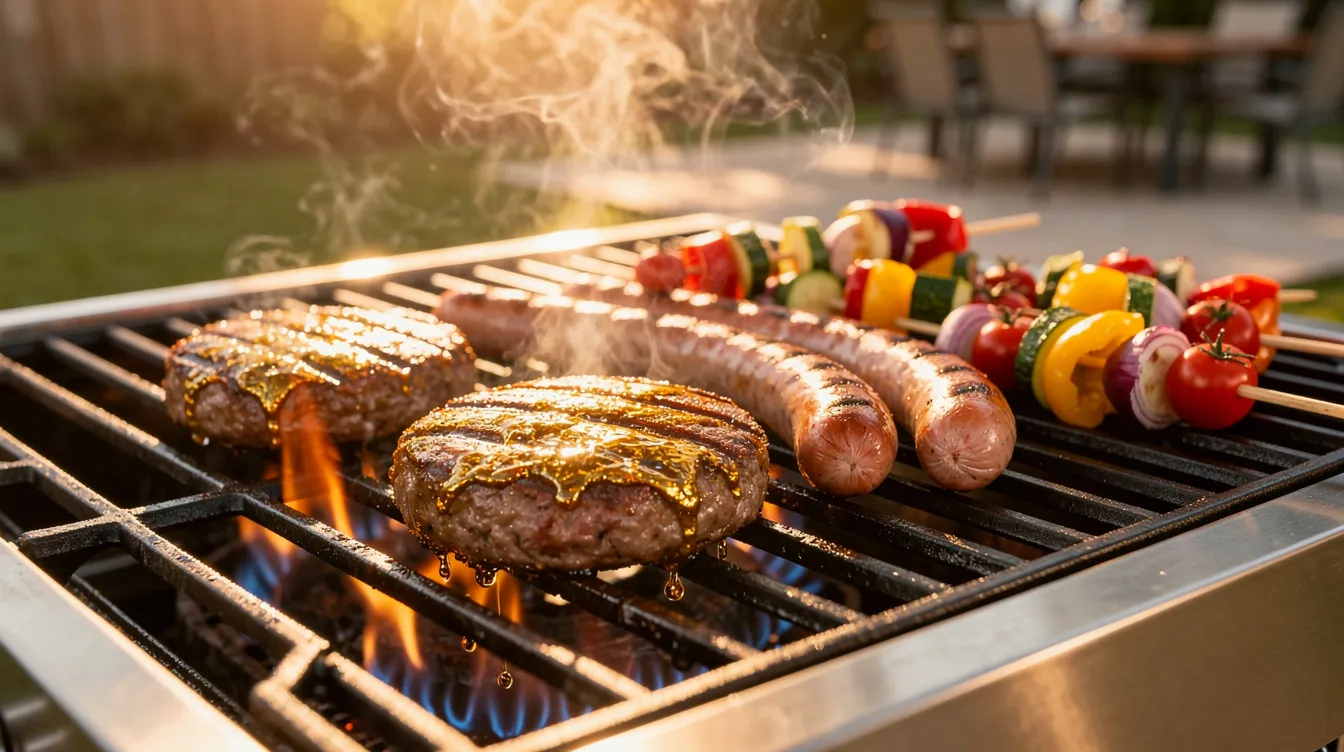
Think about recipes that travel well, cook fast, and taste great standing up with a plate in one hand. That's the tailgating sweet spot.
Frequently Asked Questions About Tailgate Gas Grills
Here are the questions buyers ask most heading into fall 2026.
Can I connect my tailgate gas grill to a 20 lb propane tank?
Many compact portable grill models support both disposable 1-lb cylinders and larger 20-lb tanks with a separate adapter hose. The adapter screws onto the tank's valve and connects to the grill's standard fitting. Follow Monument Grills' specific instructions for your model, and always check for leaks before lighting. A 20-lb tank provides roughly 430,000 BTUs of total energy, enough for multiple long tailgates.
Are tailgate gas grills as durable as bigger backyard grills?
Quality construction matters more than size. Thick steel, porcelain-coated or stainless steel grates, a tight lid fit, and corrosion-resistant materials determine longevity. Monument Grills offers an 8-year warranty on stainless steel burners in many portable models, which matches or exceeds what you'll find on some full size grills. A well-built portable model can easily be transported season after season without degrading.
How long does a 1 lb propane cylinder last?
It depends on BTU output. At roughly 10,000 BTUs per hour, expect about two hours of burn time. At 20,000 BTUs on full blast, you're looking at just over an hour. Plan on bringing at least one spare cylinder for a long game day, or connect to a larger tank if your grill supports it.
Can I use my tailgate gas grill on my truck's tailgate?
This is common, but check your vehicle's surface material first. Use a heat-proof mat underneath to protect paint and bed liner. Make sure the grill is fully stable and on a level surface before lighting. A great portable grill with a wide leg stance or a tabletop grill with rubber feet sits securely on most truck tailgates.
What's the difference between a griddle and a grill for tailgating?
A griddle offers a flat, solid cooking surface ideal for eggs, pancakes, and smash burgers. A grill has open grates that let fat drip away and give you char marks. Some tailgaters bring both, but if you only have room for one, a gas grill with a removable griddle plate accessory gives you flexibility. Shop for models that offer interchangeable grate and griddle surfaces.
Why Choose Monument Grills for Your Tailgate Gas Grill
Monument Grills is a dedicated grill specialist focused on outdoor cooking performance, from backyard feasts to the intensity of a stadium parking lot on a crisp fall Saturday.
- Monument Grills engineers tailgate-friendly gas grills with generous cooking space, powerful burners, and folding legs that pack easily yet feel rock-solid on uneven parking-lot surfaces. Their lineup spans different series and configurations, so you can match features and footprint to your space and cooking style using a dedicated Monument Grills decision guide. Every model is designed with the understanding that your grill needs to perform in wind, cold, and the organized chaos of a tailgate party.
- Design details matter across the lineup: 304 stainless steel burners backed by an 8-year warranty, well-balanced lids with clear-view glass for monitoring food without losing heat, and practical grease management systems that make repeated tailgate use through fall 2026 weather more convenient than ever.
- Consider pairing a Monument Grills portable gas grill with one of our larger backyard models. The familiar control layout means you cook with confidence whether you're at the stadium or in your own backyard, without relearning knob positions or flame behavior.
A great grill is one that makes you look forward to the next game day. Explore Monument Grills' current tailgate-ready gas grill lineup and choose the model that matches your usual crowd size, vehicle type, and preferred cooking style. Your parking lot deserves better than a flimsy box on wobbly legs.


Join the conversation
Share Your Thoughts
Have a question, a variation, or a result worth sharing? Add it to the conversation.