
On this page
The heart of every gas grill beats through its burner system, transforming propane or natural gas into the consistent, controllable heat that makes outdoor cooking a joy. Whether you're searing steaks at high temperatures or slow-roasting a whole chicken, understanding your bbq burner and how it functions can dramatically improve your grilling results. As grilling technology continues to evolve in 2026, knowing the differences between burner types, recognizing signs of wear, and maintaining these critical components has become essential knowledge for anyone serious about outdoor cooking.
Understanding BBQ Burner Types and Their Benefits
Not all burners are created equal, and the type of bbq burner in your grill significantly impacts cooking performance, heat distribution, and longevity.
Traditional Tube Burners
Tube burners remain the most common configuration in gas grills today. These cylindrical metal tubes feature strategically placed ports along their length that release flames upward toward the cooking surface. Stainless steel tube burners offer excellent corrosion resistance and can last for many years with proper maintenance.
The main advantages include:
- Even heat distribution across the cooking surface
- Easy to clean and maintain
- Cost-effective replacement options
- Compatible with most grill designs
Cast iron burners provide superior heat retention but require more diligent maintenance to prevent rust, especially in humid climates. Humid environments present unique challenges that demand regular inspection and protective measures.
Infrared Burner Technology
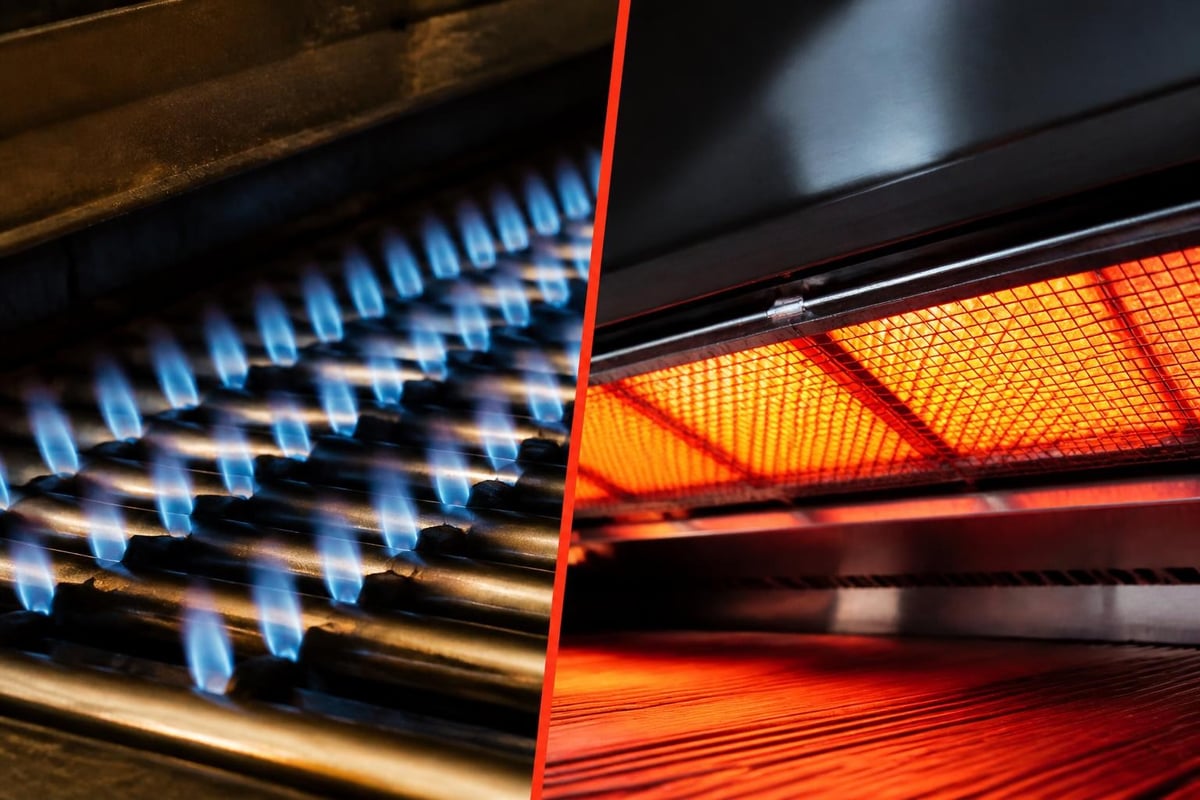
Infrared burners have revolutionized high-heat grilling by using a ceramic or metal plate that radiates intense, focused heat. Instead of heating air that then cooks your food, infrared technology directly heats the cooking surface, reaching temperatures exceeding 900°F.
Key performance characteristics:
|
Feature |
Traditional Burner |
Infrared Burner |
|---|---|---|
|
Max Temperature |
500-600°F |
900-1000°F |
|
Heat-Up Time |
10-15 minutes |
3-5 minutes |
|
Fuel Efficiency |
Standard |
Efficient for high-heat searing |
|
Best For |
General cooking |
Searing steaks |
Many modern grills incorporate both technologies, offering standard burners for everyday cooking and a dedicated infrared burner for high-heat applications. The infrared propane gas grill options available today combine versatility with specialized performance.
Signs Your BBQ Burner Needs Attention
Recognizing early warning signs can prevent complete burner failure and unsafe grilling conditions. Your bbq burner communicates its condition through several observable symptoms.
Uneven flame patterns indicate clogged ports or damaged burner tubes. A healthy burner produces consistent blue flames across its entire length. Yellow or orange flames suggest improper combustion, often caused by spider webs or debris blocking venturi tubes.
Physical inspection reveals critical issues:
- Rust or corrosion appearing as orange-brown discoloration
- Cracks or holes in the burner tube body
- Warped or misshapen burner components
- Loose connections at gas supply points
- Excessive soot buildup on burner surfaces
Temperature inconsistencies across your cooking surface often trace back to individual burner problems. If one zone runs significantly hotter or cooler than others, that specific burner likely needs cleaning or replacement.
Common Burner Problems and Quick Fixes
Many burner issues resolve with simple maintenance rather than costly replacements. Regular burner maintenance extends component life and ensures optimal performance.
Clogged burner ports represent the most frequent problem. Food debris, grease, and insect nests obstruct the small holes where flames emerge. A thin wire brush or straightened paperclip clears individual ports effectively.
Venturi tube blockages prevent proper gas-air mixing, causing weak or yellow flames. Spiders commonly build nests in these tubes during off-season storage. Removing the burner assembly and cleaning the venturi tubes with a bottle brush restores proper function.
Rust formation on stainless steel burners might seem contradictory, but exposure to salt, acids, and moisture accelerates corrosion even in corrosion-resistant materials. Regular cleaning and thorough drying after use significantly slow this process.
Maintaining Your BBQ Burner for Maximum Lifespan
Preventive maintenance dramatically extends burner life and maintains consistent cooking performance. Creating a regular maintenance schedule transforms your grill from a seasonal appliance into a long-term investment.
Post-Cook Cleaning Routine
After each grilling session, while the grill remains warm (not hot), brush cooking grates thoroughly. This simple step prevents grease and food particles from dripping onto burners and causing corrosion.
Quick maintenance checklist:
- Brush grates after every use
- Check for visible debris on burners weekly
- Wipe down burner tops monthly
- Inspect flame patterns before major cookouts
Deep Cleaning Process
Seasonal deep cleaning should occur at least twice yearly, ideally in spring before peak grilling season and in fall before winter storage.
Remove burners completely for thorough cleaning:
- Turn off gas supply at the tank or main line
- Disconnect burner tubes from gas valves
- Lift burners out of the firebox
- Soak in warm, soapy water for 30 minutes
- Scrub with a nylon brush to remove debris
- Clear all ports with a wire or paperclip
- Rinse thoroughly and dry completely
- Inspect for damage before reinstalling
Never use oven cleaner or harsh chemicals on burners, as residue can create dangerous flare-ups or toxic fumes when heated.

Protecting Burners During Off-Season
Winter storage significantly impacts burner longevity. Moisture trapped inside a covered grill creates the perfect environment for corrosion.
|
Storage Method |
Burner Protection Level |
Best For |
|---|---|---|
|
Uncovered outdoor |
Poor |
Not recommended |
|
Covered outdoor |
Fair |
Mild climates only |
|
Garage storage (grill only, propane cylinder disconnected and left outdoors) |
Good |
Most situations |
|
Indoor storage (grill only, propane cylinder disconnected and left outdoors) |
Excellent |
Long-term protection |
Before moving a propane grill into a garage or shed, close the cylinder valve, disconnect the cylinder, and store it upright outdoors in a well-ventilated spot away from doors and windows. If outdoor storage is necessary, invest in a high-quality, breathable grill cover. The 2-burner grill cover options provide weather protection while allowing moisture to escape, preventing condensation buildup.
Troubleshooting BBQ Burner Performance Issues
When your bbq burner doesn't perform as expected, systematic troubleshooting identifies the root cause quickly.
Low Heat Output
If your grill struggles to reach target temperatures, multiple factors might be responsible. Check your propane tank level first-many frustrating grilling sessions trace back to low fuel.
Gas flow restrictions often occur at:
- Regulator (try the reset procedure)
- Gas valve connections
- Burner venturi tubes
- Individual burner ports
The regulator reset procedure involves turning off all burner knobs, closing the tank valve, disconnecting the regulator, waiting five minutes, then reconnecting everything and testing again. This simple reset resolves many low-pressure issues.
Uneven Cooking Temperatures
Hot and cold spots across your cooking surface indicate specific burner problems. Common burner issues like clogged ports or damaged tubes create these inconsistencies.
Test each burner individually:
-
Light one burner at a time
-
Observe flame pattern and color
-
Listen for unusual hissing or popping
-
Feel for heat consistency across zones
Burners on 4-burner gas grills should produce uniform flames across their entire length. Any burner showing weak spots needs cleaning or replacement.
Flame Color and Pattern Problems
Blue flames indicate proper combustion with optimal gas-air mixture. Yellow or orange flames signal incomplete combustion, usually from insufficient air intake or clogged ports.
Flame behavior diagnosis:
- Weak, low flames: Gas flow restriction
- Dancing, inconsistent flames: Wind interference or damaged burner
- Roaring, lifting flames: Too much air in mixture
- Yellow tips: Normal at startup, problematic if persistent
Selecting Replacement BBQ Burners
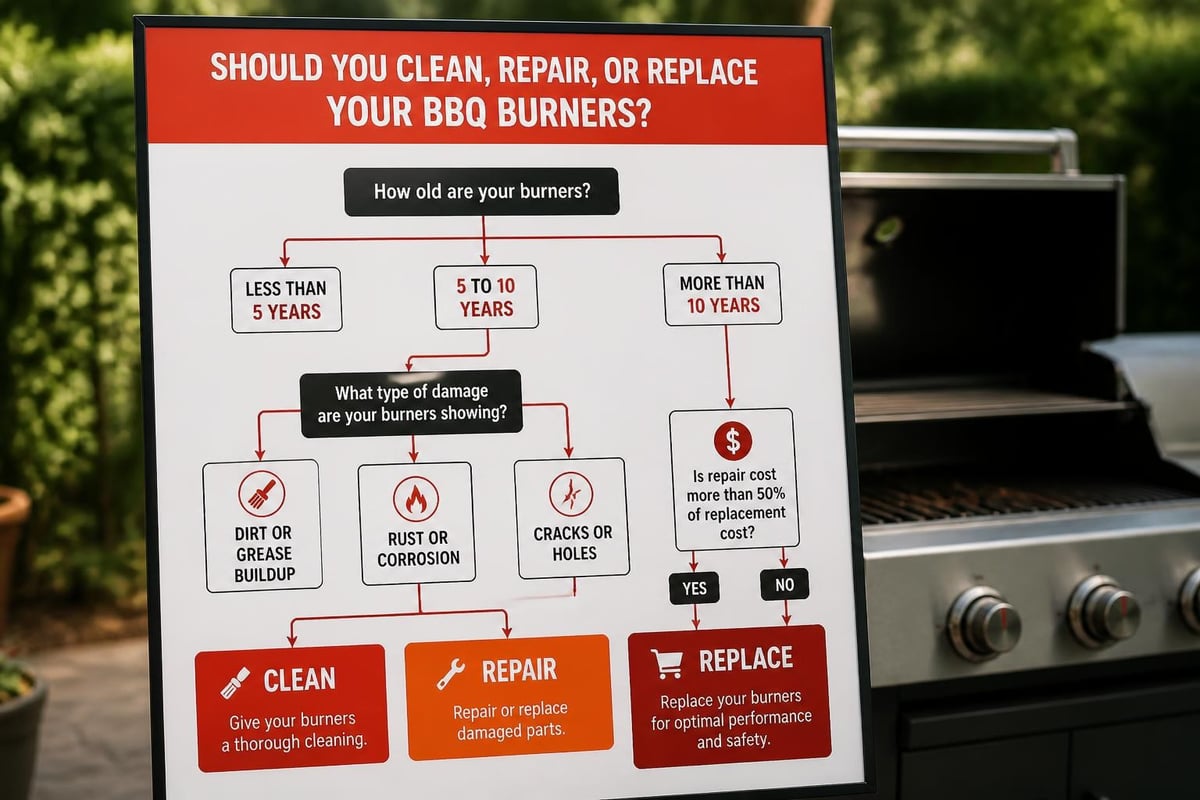
Eventually, even well-maintained burners require replacement. Knowing when to replace versus repair saves money and prevents safety hazards.
When to Replace vs. Repair
Minor issues like clogged ports or loose connections warrant repair attempts. However, certain conditions demand immediate replacement:
Replace burners immediately if you observe:
- Holes or cracks in burner tubes
- Severe rust causing structural weakness
- Warping that prevents proper installation
- Persistent flame problems after cleaning
- Burners older than 10 years
Cost-benefit analysis matters. If replacement burners cost less than 30% of a new grill's price, replacement makes financial sense, especially for quality grills worth maintaining.
Matching Burners to Your Grill
Universal burners fit many grills but may not perform optimally. OEM (Original Equipment Manufacturer) burners guarantee proper fit and performance but typically cost more.
Critical specifications to match:
- Physical dimensions (length, width, height)
- Port configuration and spacing
- Gas inlet location and size
- Mounting bracket design
- BTU rating for heat output
The Monument Grills replacement parts collection ensures compatibility and performance that matches original specifications.
Material Considerations for Longevity
Burner material directly affects lifespan and performance characteristics.
|
Material |
Durability |
Pros |
Cons |
|---|---|---|---|
|
304 Stainless Steel |
Long-lasting with regular care |
Corrosion resistant, moderate cost |
Can rust in harsh conditions |
|
409 Stainless Steel |
Shorter life in wet or coastal climates |
Affordable, adequate performance |
Less corrosion resistant |
|
Cast Iron |
Long-lasting if kept dry and seasoned |
Excellent heat retention |
Requires careful maintenance |
|
Cast Stainless |
Among the most durable options |
Superior durability |
Higher cost |
304 stainless steel represents the sweet spot for most grill owners, offering excellent corrosion resistance at reasonable prices. Marine-grade 316 stainless provides maximum corrosion protection for coastal environments but rarely appears in residential grills due to cost.
Optimizing BBQ Burner Performance
Beyond basic maintenance, several techniques maximize your bbq burner's efficiency and cooking capability.
Achieving Proper Air-Gas Mixture
The venturi system mixes air with gas before combustion. If your model has an adjustable air shutter, its manual explains how and when to set it.
If flames look yellow or lazy:
- Turn off the grill and the gas supply, and let everything cool
- Clean the burners, burner ports, and venturi tubes (spider webs and debris are common culprits)
- Follow your model's manual for any air-shutter adjustment, and never adjust it while the grill is lit
- If the problem continues, contact Monument support or a qualified service technician
Heat Distribution Strategies
Strategic burner use creates different cooking zones for various techniques. Three-zone setups work exceptionally well:
- Direct high heat zone: Burners under this area on high for searing
- Indirect medium zone: Burners under the food off, with the neighboring main burners on medium for roasting
- Cool zone: Burners under this area off for warming or resting meat
The Mesa collection grills feature multiple burner configurations that support versatile zone cooking approaches.
BTU Ratings and Real-World Performance
Higher BTU ratings don't automatically mean better performance. A 15,000 BTU burner in a poorly designed grill may underperform compared to a 12,000 BTU burner in an efficient system.
What actually matters:
- Total cooking surface area
- Lid design and heat retention
- Burner placement and coverage
- Wind protection features
Calculate BTU-per-square-inch by dividing total BTU output by primary cooking area. Treat that number as a rough comparison only, since burner design, lid fit, and wind protection matter just as much.
Safety Considerations with BBQ Burners
Gas grilling involves inherent risks that proper burner maintenance and operation minimize.
Gas Leak Detection and Prevention
Annual leak testing should be non-negotiable. Apply soapy water to all gas connections while the system is pressurized (tank on, burners off). Bubbling indicates leaks requiring immediate attention.
Never ignore these warning signs:
- Gas odor near the grill
- Hissing sounds from connections
- Flames appearing outside the firebox
- Excessive rust on gas lines
Regular maintenance inspections catch potential safety issues before they become dangerous situations.
Proper Lighting Procedures
Following manufacturer-recommended lighting procedures prevents dangerous gas accumulation. Always light burners with the lid open and never lean over the grill while lighting.
Safe lighting sequence:
- Open grill lid completely
- Turn on gas supply at tank
- Turn one burner knob to high
- Press igniter button immediately
- If burner doesn't light within 5 seconds, turn off and wait 5 minutes
- Repeat process or use long match/lighter
Carbon Monoxide Awareness
Outdoor grilling generally doesn't create carbon monoxide concerns, but using grills in enclosed spaces or garages can be fatal. Burners require adequate ventilation to combust properly and safely.
Critical safety rules:
- Never use gas grills indoors
- Maintain minimum 10-foot clearance from structures
- Never grill in enclosed patios or garages
- Ensure adequate airflow around the grill
Upgrading Your BBQ Burner System
Modern burner technology offers compelling reasons to upgrade even if current burners still function.
Benefits of Modern Burner Designs
Recent innovations have improved efficiency, durability, and cooking performance significantly compared to burners from even five years ago.
2026 burner technology advances:
- Stainless steel heat shields for better protection
- Improved port design for more consistent flames
- Corrosion-resistant coatings extending lifespan
- Better venturi designs preventing clogs
Replacement and Conversion Parts
Replacement burners should match your grill's exact model and fuel type. Use only the burners and conversion kits the manufacturer approves for that model. Don't increase burner output, add an infrared burner, or switch fuel types on your own, because that changes how the gas system was designed and certified to work.
Approved parts can still make a real difference:
- Replace worn burners with the model-specific stainless replacement part
- Use the manufacturer's natural gas conversion kit only if your model is listed as convertible
The gas grill accessories collection includes upgrade components that enhance existing grill capabilities.
Complete System Considerations
Sometimes upgrading individual burners makes less sense than investing in a complete new grill system. Calculate the total cost of burners, igniters, valves, and labor versus a new grill with warranty coverage.
Upgrade if:
- Replacement parts exceed 40% of new grill cost
- Grill is less than 5 years old
- Firebox and frame remain structurally sound
- New burners significantly improve performance
Replace entire grill if:
- Multiple major components need replacement
- Firebox shows severe rust or damage
- Grill exceeds 10 years old
- Modern features justify the investment




Join the conversation
Share Your Thoughts
Have a question, a variation, or a result worth sharing? Add it to the conversation.