
On this page
 Grilled burgers, ready for your next backyard cookout.
The grilled burger is the backbone of backyard cooking—simple enough for a Tuesday, impressive enough for a holiday crowd. This guide covers everything from picking the right ground beef to managing flare-ups, building flavor with seasoning and toppings, and nailing the timing on both gas and charcoal grills.
Quick answer: time, temp, and setup for great grilled burgers
Preheat your gas grill to 425–450°F (218–232°C), use 80/20 ground beef formed into ⅓- to ½-pound patties about ¾ inch thick, and cook 3–5 minutes per side over direct heat depending on thickness. The USDA recommends cooking ground beef to an internal temperature of at least 160°F (71°C) for food safety. Some cooks pull burgers at 145–155°F for juicier results, but they do so at their own risk.
On a Monument Grills gas grill, set up a two-zone fire—one side on medium-high heat for searing, the other on low or off for indirect finishing. This lets you build a crust without charring or losing control to flare-ups. Add the cheese during the last 1–2 minutes with the lid closed, and toast your buns cut-side down on the cooler zone while the cheese melts.
Choosing the right ground beef for juicy burger patties
The meat you start with matters more than any topping or sauce you put on top. If the beef is too lean, no amount of ketchup will save a dry patty. If it's too fatty, you'll lose more of the burger to shrinkage and dripping.
Use an 80/20 mix of ground beef for juiciness—that's 80% lean, 20% fat. Ground chuck is typically 80% lean and 20% fat, which makes it the go-to for most backyard grilling. The lean-to-fat ratio drives both flavor and moisture: enough fat renders during cooking to keep the interior juicy, while enough lean meat holds the patty together.
A 75/25 fat ratio offers a richer option, though expect more shrinkage. On the other end, extra-lean ground beef—90% lean or higher, like ground sirloin—risks dryness unless you compensate with toppings, sauces, or added fat.
Pre-formed frozen patties are convenient but may differ in density and fat content from fresh-ground beef. If you thaw them before cooking, do so in the refrigerator. Avoid pressing them hard on the grill. For grilled burgers, ask a local butcher for an 80–83% lean blend of chuck, or mix ground chuck with a small portion of ground sirloin for beefier flavor.
- For 4 burgers: buy 1⅓ to 2 pounds of 80/20 ground beef.
- For 6 burgers: buy 2 to 2½ pounds.
How to form burger patties that grill evenly
The way you shape burger patties affects cooking time, shrinkage, and texture as much as grill temperature does.
Start with cold meat. Keep the meat cold before forming patties so the fat stays firm and doesn't smear into the lean, which would make the finished burger dense. Divide 1½ to 2 pounds of ground beef into 4 to 6 portions. Gently form each into a disc about 4½ inches wide and ¾ to 1 inch thick.
Form patties about 1 inch larger than the bun to account for shrinkage. Do not over-mix ground beef when forming patties; handle the meat gently to avoid toughness, and stop shaping as soon as the patty holds together.
Press a slight indentation into each raw patty. Create a shallow dimple in the center using your thumb or the back of a spoon. This helps limit puffing as the proteins contract over heat, so your patties stay flatter and cook more evenly.
If you're stuffing cheese inside or mixing in add-ins, expect longer cook times and more flare-ups from melting fat. For most people, keeping it simple and seasoning the outside works better.

How to season burgers for the grill
The best grilled burgers usually start with keeping seasoning simple and building flavor through toppings, a good burger sauce, and smoke from the grill itself.
Season the outside of the patties just before grilling. Kosher salt and freshly ground black pepper on both sides are all you need for a great burger with a well-developed crust.
For a different burger recipe direction, try one of these blends per pound of ground beef:
| Seasoning blend | Amount and flavor notes · per pound of beef |
|---|---|
| Southwest | ½ tsp chili powder, ¼ tsp ground cumin, and a pinch of cayenne pepper. Pairs well with pepper Jack and guacamole. |
| Garlic-herb | ½ tsp garlic powder, ½ tsp onion powder, and ¼ tsp dried oregano. |
| Smoky BBQ | ½ tsp smoked paprika and ¼ tsp brown sugar. Sugar darkens fast over high heat, so watch closely. |
| Cajun | About ½ tsp Cajun seasoning for a spicy kick. |
Add Worcestershire sauce for extra flavor, but apply it very lightly mixed into the meat or brushed on the surface. Too much liquid makes patties mushy. The same goes for teriyaki sauce or soy sauce—a light touch keeps things right. For more grilling tips on seasoning and technique, keep proportions modest and let the beef do the talking.
Gas grill vs charcoal grill: which is better for burgers?
A charcoal grill adds more smoke flavor to burgers, while a gas grill like those from Monument Grills offers easier heat adjustments—especially for weeknight grilling when you don't want to spend time managing hot coals and a chimney starter.
Gas grill advantages
Fast preheating, burner control for a two-zone setup, and convenient heat adjustments make gas grills practical for frequent cooking. Depending on the model, Monument Grills gas grills may also offer dedicated high-heat zones or temperature-monitoring features.
The trade-off is less smoke from the fuel itself compared with charcoal. You can add smoke flavor with a smoker box or foil packet with wood chips, used according to your grill and accessory instructions.
Charcoal grill advantages
Charcoal offers a different smoke character and can deliver strong searing heat. Fat dripping onto hot coals also contributes to the cooking aroma. The downside is more labor—lighting, adding coals, and managing vents—and more hands-on temperature management.
If you grill burgers several times a month, a gas grill saves preparation time. If you grill mainly on weekends and enjoy tending the fire, charcoal may suit the way you like to cook.
Setting up your Monument Grills gas grill for burger success
Exact steps vary by Monument Grills model, so consult your manual for specifics. This is a general setup guide for a multi-burner gas grill.
Preheat
Light the grill with the lid open, following your model's ignition instructions. Once the burners are lit, close the lid and preheat as directed in the manual. The original guide allows about 10–15 minutes; actual preheating time depends on the model and conditions.
Adjust the burners for the cooking temperature you need before adding food. Keep in mind that the lid thermometer measures temperature at its location, rather than directly at the cooking grate.
Create a two-zone fire
On a 3- or 4-burner Monument Grills gas grill, set one side to medium-high heat for direct searing and leave the other side off for indirect finishing. This gives you a hot zone for crust and a cooler zone for finishing or moving patties away from flare-ups.
If your model has a dedicated searing zone, follow its instructions and watch the surface closely before moving burgers to the regular burners to finish cooking.
Prep the grates
Start with clean grill grates. After preheating, remove residue with an appropriate grill-cleaning tool and check that no loose bristles or debris remain. If your manual recommends oiling the grates, use a small amount of cooking oil and long tongs, keeping oil away from open flames.
For a full beginner walkthrough, explore the Monument Grills grilling basics guides.

Grill temperatures and timing for beef burgers
Grill temperature and burger thickness together determine how long to grill burgers, but time is always secondary to checking internal temperature with a meat thermometer. The following estimates assume a preheated grill at roughly 400–450°F.
| Patty thickness | Grill setup | Estimated total time to 160°F | Doneness check |
|---|---|---|---|
| ½ inch | Direct heat, gas or charcoal | 7–8 minutes | Check the center with a meat thermometer. |
| ¾ inch | Direct heat, then indirect to finish as needed | 10–12 minutes | Check the center with a meat thermometer. |
| 1 inch | Direct heat, then indirect to finish as needed | 13–15 minutes | Check the center with a meat thermometer. |
These are estimates, not guarantees. Actual cooking time varies with wind, ambient temperature, grill model, patty thickness, and starting temperature. Begin checking before the estimated time is up.
Insert a meat thermometer through the side of the hamburger patty into the center, avoiding contact with the grill grates. Ground beef should reach at least 160°F (71°C). Color alone is not a reliable indicator of doneness.
For more timing guidance, see the Monument Grills burger time and temperature guide.
Windy or cold conditions can drop grill temperature faster each time you open the lid, so rely on thermometer readings and crust development rather than a strict clock.
Step-by-step: how to grill burgers on a gas grill
1. Get ready
- Preheat and prep grates. Light your Monument Grills gas grill according to its manual, with the lid open during ignition. Once lit, preheat and prepare the grates as directed.
- Form and chill patties. Gently form ¾-inch-thick patties from cold ground beef. Create a shallow dimple in the center. If you have time, set patties on parchment paper on a sheet pan and refrigerate for 15–20 minutes.
- Season burgers. Season the outside with kosher salt and freshly ground black pepper, or your chosen blend, right before they go on the grill.
2. Sear and finish
- Place patties on the direct-heat side. Space patties at least an inch apart. Begin cooking over direct heat to develop a crust, adjusting the burners if the surface browns too quickly.
- Sear without pressing. Let patties cook undisturbed until the underside has browned and releases from the grate. Avoid pressing down on the patties while cooking to retain juices.
- Flip the burgers. Turn with a spatula once a crust forms. If flare-ups occur, check your burner flame height, reduce the heat, or shift burgers to the indirect zone.
- Move to indirect heat to finish. Once both sides are seared, move burgers to the cooler side as needed. Close the lid for indirect cooking and check that the center reaches 160°F.
3. Melt, toast, and serve
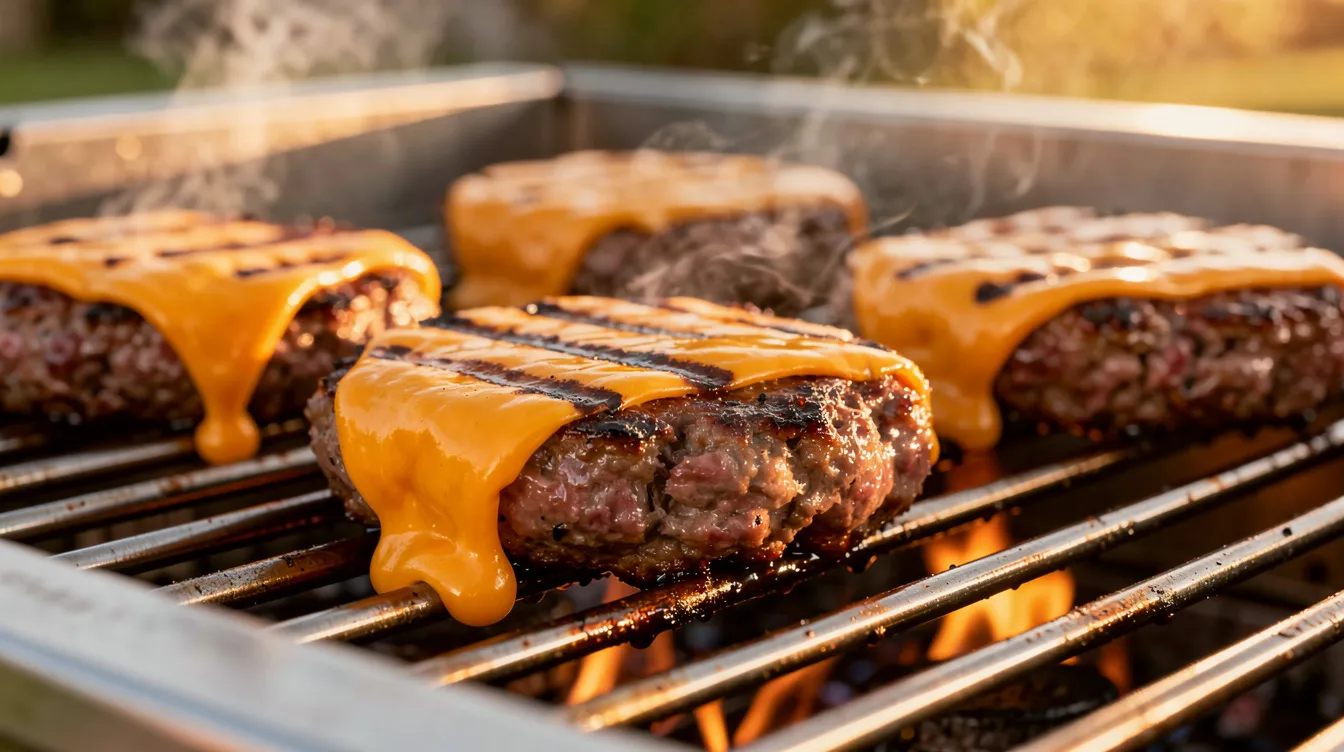
- Add the cheese. Add cheese near the end of cooking. Close the lid briefly so the cheese melts, then confirm the burger's final internal temperature.
- Toast buns. Place hamburger buns cut-side down on the cooler zone during the final 1–2 minutes. Pull them when the edges are golden with light grill marks.
- Rest and serve. Remove burgers from the grill and let them rest for 2–3 minutes. Then assemble on your toasted buns.
If flames reach the patties, move them away from direct heat and reduce the burner setting as needed. Never spray water onto a grease flare-up. For a sustained grease fire, follow the emergency instructions in your grill manual.
How to grill burgers on a charcoal grill
Many readers own both a charcoal grill and a gas grill, and you can use the same burger patties on either one.
Build a two-zone fire
Light briquettes or lump charcoal in a chimney starter according to its instructions. Once ready, pile the hot coals on one half of the grill for direct heat and leave the other half coal-free for indirect cooking. Adjust the vents to target about 400–450°F inside the cooker.
Sear, then finish on the cooler side
Sear burgers for roughly 2–4 minutes per side over the hot coals, watching crust development. Move them to the cooler side as needed and finish cooking with the lid closed until the internal temperature reaches 160°F.
Flare-ups can occur when fat drips onto the coals. Move burgers temporarily to the indirect side and wait for flames to subside rather than dousing the coals with water.
- For extra smoke flavor, use a small amount of hickory, apple, or cherry wood according to your charcoal grill's instructions.
When to add the cheese and toast the buns
Add the cheese during the final 1–2 minutes. Move burgers to the indirect or cooler side before placing cheese slices so the surface doesn't scorch while the cheese melts. American, cheddar, Swiss, and pepper Jack are all common choices. Close the lid briefly to trap heat and help the cheese melt evenly.
Toast buns on the cooler zone. Place them cut-side down during the final 1–2 minutes and pull them as soon as the edges are golden. Brush lightly with melted butter and a pinch of salt or garlic powder for extra flavor without overshadowing the beef.
Building your burger: toppings, sauces, and variations
Once you can reliably grill burgers, toppings and sauces are where you customize for different guests and occasions. A few well-chosen layers turn a good burger into a great burger.
Classic builds
- Lettuce, tomato, red onion, and dill pickles with American cheese, ketchup, and mustard.
- Cheddar cheese, crispy bacon, pickles, and barbecue sauce for a backyard BBQ burger.
- Sharp cheddar and grilled onions for a simple cheeseburger.
More adventurous combinations
- Guacamole and pepper Jack.
- Feta cheese, roasted red peppers, and arugula.
- Blue cheese and caramelized onions.
- Roasted green chiles and chipotle mayo.
A creamy burger sauce made with mayonnaise, pickles, mustard, and a touch of paprika adds richness. Garlic aioli is another option, especially with leaner patties. For a different take, try the brat burger with cheese sauce recipe from Monument Grills.
Balance your toppings with something creamy, something crunchy, something fresh, and something acidic.
Nutrition facts and smarter burger choices
Calories and fat depend on patty size, meat blend, cooking losses, buns, cheese, sauces, and toppings. For useful nutrition facts, calculate your actual ingredients and portions rather than relying on a generic burger estimate.
Simple ways to lighten up without losing the grilling experience:
- Choose 85/15 lean ground beef instead of 80/20.
- Make smaller patties.
- Use whole-grain buns or lettuce wraps.
- Load up on fresh vegetables like tomato, red onion, and leafy greens.
- Use thinner layers of cheese and go easy on mayonnaise-based sauces.
You can also grill turkey burgers, salmon burgers, or black bean burgers on a Monument Grills gas grill. Follow a recipe suited to the protein: handling, cooking times, and safe internal temperatures differ from ground beef.
Quick tips and troubleshooting common burger problems
| Burger problem | What to do |
|---|---|
| Burgers sticking to grates | Preheat properly, clean the grates, and don't flip too early. The patty should release more easily once a crust forms. |
| Patties falling apart | Chill patties before grilling, handle gently, and avoid stuffing them with too many fillings. See more common grilling mistakes. |
| Burgers drying out | Try 80/20 ground beef, avoid pressing the patties, and use a thermometer to prevent unnecessary cooking after the center reaches 160°F. |
| Flare-ups | Move burgers away from direct flames and reduce the heat as needed. Never spray water onto a grease flare-up. |
| Uneven cooking | Use similarly sized patties, maintain consistent heat, and reposition patties if parts of the grate cook faster than others. |
| Tough or sausage-like texture | Handle the meat gently and season the outside shortly before cooking. Mixing salt throughout the raw meat can tighten the texture. |
FAQs about grilling burgers on Monument Grills
How long should I grill burgers on a Monument Grills gas grill?
On a preheated grill at about 425–450°F, a ¾-inch-thick burger may take roughly 10–12 minutes total, including indirect finishing as needed. Always check that the center reaches 160°F with a meat thermometer—the clock is a guide, not a guarantee. For another example, see the Monument Grills classic hamburger recipe.
Should I close the lid when grilling burgers?
Closing the lid during indirect finishing helps maintain heat around thicker patties. While searing, monitor browning and flare-ups closely. Follow your model's instructions for lid position, particularly when using a dedicated searing burner.
Can I grill frozen burger patties directly on a gas grill?
Yes, when the package instructions allow it. Frozen patties take longer than thawed patties, so adjust the heat to avoid burning the outside before the center cooks through. Check each beef patty reaches 160°F internally.
How do I prevent flare-ups when I grill burgers?
Keep a two-zone setup so you can move patties away from flames. Start with a clean grill and grease-management system, avoid pressing the patties, and reduce the burner setting when needed. Never spray water onto a grease flare-up.
Can I use the remaining grill heat for other foods after burgers?
Yes. Adjust the burners and grill quick sides such as sliced vegetables, pineapple rings, or buns for a second batch. Use clean utensils and serving plates, and keep ready-to-eat food away from surfaces or utensils that held raw beef.
Do I need to rest burgers before serving?
A short 2–3 minute rest gives you time to finish the buns and assemble the toppings. Burgers cool quickly, so serve promptly rather than leaving them to rest for an extended period.
Your burger skills come down to a handful of fundamentals: good 80/20 ground beef, gently formed patties, two heat zones, and a meat thermometer. Once those basics are locked in, every cookout gets easier. Fire up your Monument Grills gas grill and put these steps to work this weekend.


Join the conversation
Share Your Thoughts
Have a question, a variation, or a result worth sharing? Add it to the conversation.